
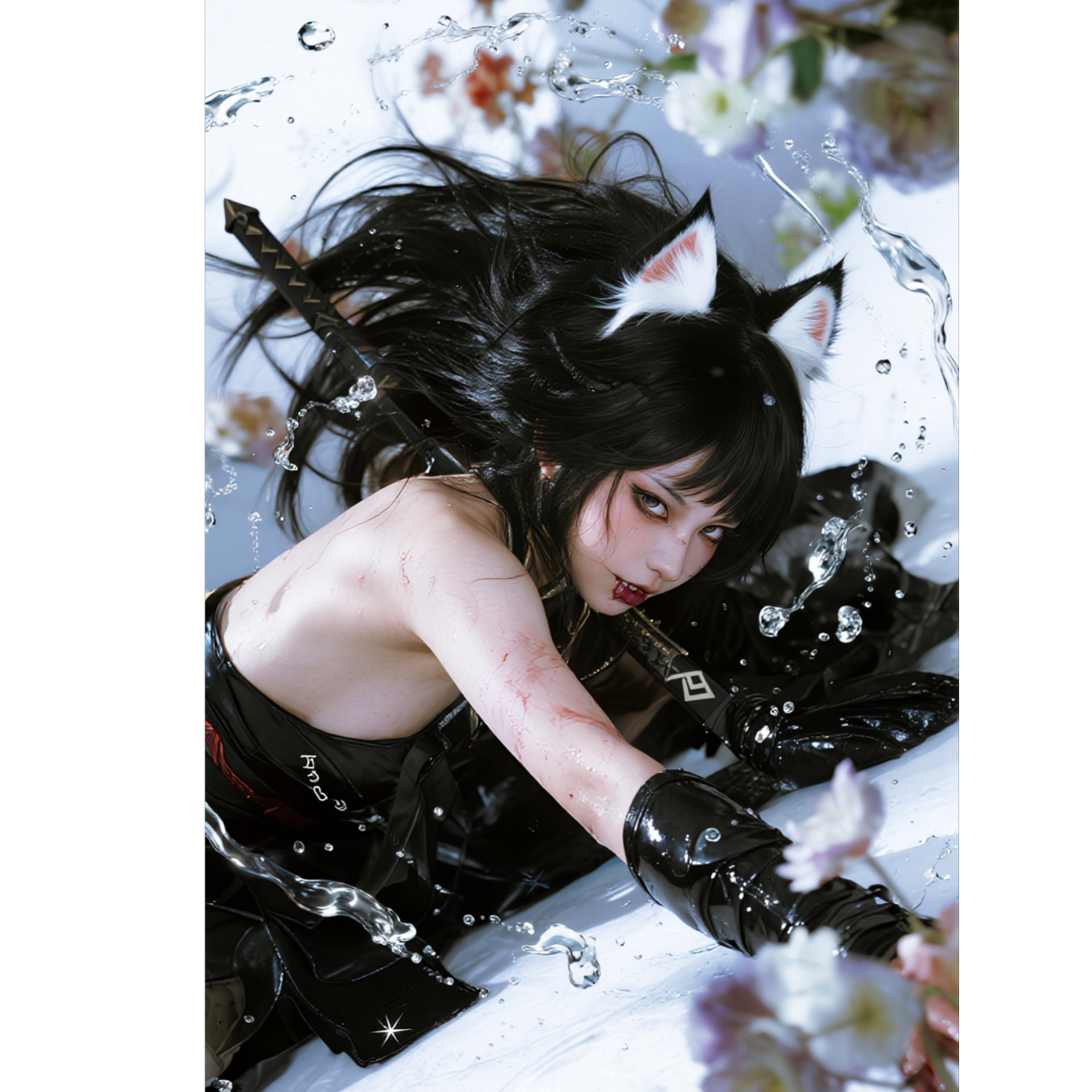
閒快活
[Cyber Enka × Future Funk Club Hybrid × Addictive Electro Rhythm × Japanese Traditional Fusion], Powerful ENKA, fast-pace, heavy TAIKO, taiko rhythm driven, ENKA, female ENKA voice, PRIDE of ENKA,Vocal style: Female vocal in the style of Huang Ling, seductive and playful, crisp articulation with a teasing, jazzy inflection, Strong phrasing, use of vibrato and subtle nasal tone, Chinese female vocal with traditional Chinese singing techniques (slight melisma, subtle ornamentation), uniquely delayed phrasing mimicking traditional enka breath pauses], [BPM: 148 with triplet swing], High-speed punk rock with glam flair and industrial edge, Explosive distorted guitars, pounding drums, and metallic textures drive an adrenaline-fueled anthem, vocals are nasal, raspy, Japanese speed folk metal, traditional ondo-style melodies played by distorted synths, taiko drums, shamisen synth, koto samples, shakuhachi flute leads, screaming female vocals, powerful clean vocals, rapid-fire rap verses,
閒快活
[Cyber Enka × Future Funk Club Hybrid × Addictive Electro Rhythm × Japanese Traditional Fusion], Powerful ENKA, fast-pace, heavy TAIKO, taiko rhythm driven, ENKA, female ENKA voice, PRIDE of ENKA,Vocal style: Female vocal in the style of Huang Ling, seductive and playful, crisp articulation with a teasing, jazzy inflection, Strong phrasing, use of vibrato and subtle nasal tone, Chinese female vocal with traditional Chinese singing techniques (slight melisma, subtle ornamentation), uniquely delayed phrasing mimicking traditional enka breath pauses], [BPM: 148 with triplet swing], High-speed punk rock with glam flair and industrial edge, Explosive distorted guitars, pounding drums, and metallic textures drive an adrenaline-fueled anthem, vocals are nasal, raspy, Japanese speed folk metal, traditional ondo-style melodies played by distorted synths, taiko drums, shamisen synth, koto samples, shakuhachi flute leads, screaming female vocals, powerful clean vocals, rapid-fire rap verses,
Lyrics
Musical Arrangement: ©coreone286
All Rights Reserved | Copyright ©coreone286
--------------------------------------------------------
适意行,安心坐,渴時飲
饑時餐,醉時歌,困來時就向莎茵臥
日月長,天地闊,閒快活!
渴時飲,饑時餐,醉時歌,閒快活!
舊酒投,新醅潑,老瓦盆邊笑呵呵!
舊酒投,新醅潑,老瓦盆邊笑呵呵!
他出一對雞,我出一個鵝!
他出一對雞,我出一個鵝!
閒快活!閒快活!
[Instrumental solo]
意馬收,心猿鎖
跳出紅塵惡風波
離了利名場,鑽入安樂窩
意馬收,心猿鎖
跳出紅塵惡風波
離了利名場,鑽入安樂窩
閒快活!
南畝耕,東山臥
世態人情經歷多
閒將往事思量過
賢的是他,愚的是我,爭甚麼?
賢的是他,愚的是我,爭甚麼?
爭甚麼?
Walk with ease, sit at peace, drink when I am dry,
Eat when I am hungry, sing when I am drunk,
When sleep arrives, I lie upon the grass.
The sun is long, the earth is vast — carefree joy!
Drink when I am dry, eat when I am hungry,
Sing when I am drunk — carefree joy!
Old wine poured, new brew spilled,
Beside the earthen jar I laugh with cheer!
Old wine poured, new brew spilled,
Beside the earthen jar I laugh with cheer!
He brings out a pair of chickens, I bring a single goose!
He brings out a pair of chickens, I bring a single goose!
Carefree joy! Carefree joy!
The wild horse of thought is reined, the restless ape of heart is chained,
Escaping from the dust and storm of worldly strife,
Leaving behind the stage of fame and gain,
I burrow into a nest of peace.
The wild horse of thought is reined, the restless ape of heart is chained,
Escaping from the dust and storm of worldly strife,
Leaving behind the stage of fame and gain,
I burrow into a nest of peace — carefree joy!
Plowing the southern fields, resting on the eastern hills,
I’ve witnessed much of worldly ways and human hearts,
Idly I weigh the past, and let it pass.
Wise is he, foolish am I — so why contend?
Wise is he, foolish am I — so why contend?
Why contend?
--------------------------------------------------------
《四塊玉·閒適(四首)》
元 · 關漢卿
一
適意行,安心坐,渴時飲饑時餐醉時歌,困來時就向莎茵臥。
日月長,天地闊,閑快活!
二
舊酒投,新醅潑,老瓦盆邊笑呵呵,共山僧野叟閑吟和。
他出一對雞,我出一個鵝,閑快活!
三
意馬收,心猿鎖,跳出紅塵惡風波,槐陰午夢誰驚破?
離了利名場,鑽入安樂窩,閑快活!
四
南畝耕,東山臥,世態人情經歷多。閒將往事思量過。
賢的是他,愚的是我,爭甚麼?
Guan Hanqing (c. 1220–c. 1300) was one of the most celebrated dramatists of the Yuan dynasty and is often hailed as the “Father of Chinese Zaju Drama.” Living in an era when Mongol rule restricted many Han literati from entering officialdom, Guan chose the theater as his stage for truth and social critique. He wrote more than sixty plays, of which about eighteen survive, showcasing his mastery of language, structure, and character.
His works often centered on ordinary people—women, scholars, soldiers, and commoners—giving them dignity, wit, and resilience. The most famous, The Injustice to Dou E (Dou E Yuan), is a powerful tragedy exposing corruption and the suffering of the innocent. Guan’s sharp humor, vivid dialogue, and empathetic portrayals reflected his deep concern for justice and humanity.
Unlike many contemporaries who sought refined elegance, Guan embraced colloquial expressions and lively rhythms, making his plays accessible to a broad audience. This artistic choice not only brought drama closer to real life but also gave Yuan theater its enduring vitality.
Today, Guan Hanqing is remembered as a pioneer whose legacy shaped Chinese drama for centuries, influencing later playwrights and establishing Yuan zaju as a pinnacle of world theater history.